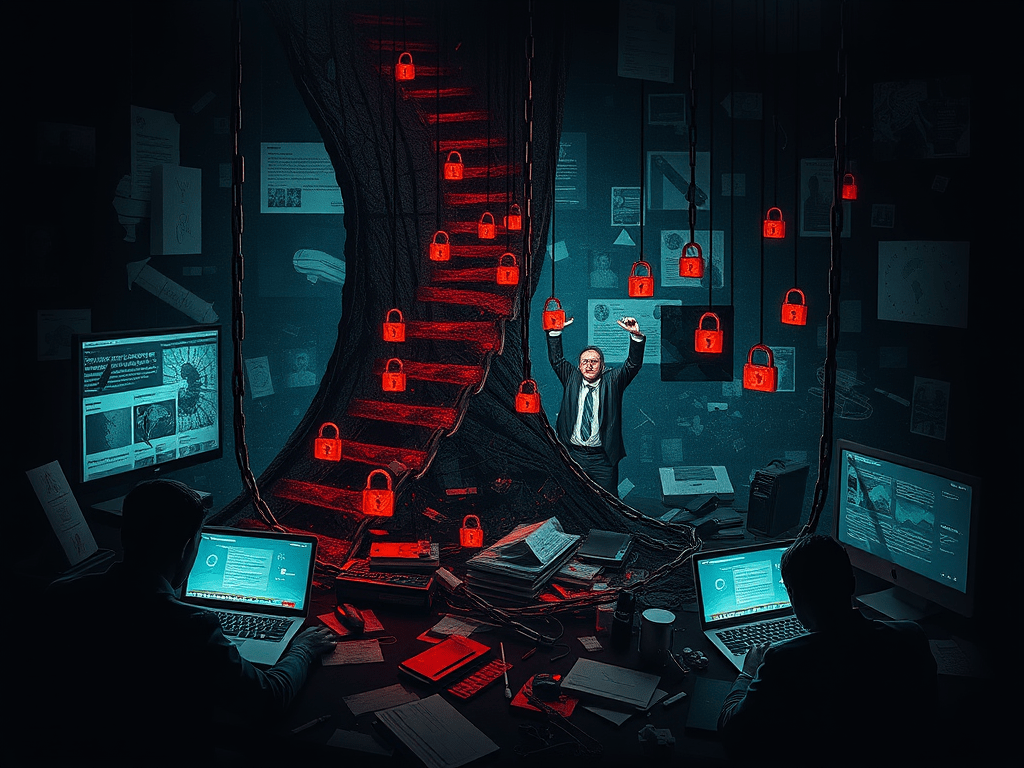
There was a time before feeds were addictive, before fact-checks became gospel, before every post felt like it needed legal review, when the internet actually belonged to the people using it.
It was messy. Chaotic. Sometimes uncomfortable. But it was real.
You could stumble across something wild. You could read an idea that punched you in the gut. You could post something raw, unfiltered, and true, and deal with whatever came next. That was the deal. That was freedom.
Now? The internet feels like it’s been childproofed. Every sharp edge, every risk, every real thing is covered in padding.
You scroll, and it’s clear you’re not alone. Not in the good way. More like being watched. Every click, every post, every search passes through a quiet system that decides whether you’re safe enough to be seen.
You’re not exploring anymore. You’re being supervised.
The Wild Internet Got Tamed, and So Did Men
The early internet was like the open range. Libertarian. Unregulated. Unpredictable. It gave people room to create, argue, fail, get better, or disappear.
It reflected the kind of world that demands you grow up and take responsibility for your thoughts.
But as Big Tech scaled and money came pouring in, that kind of freedom became a liability.
Free speech isn’t stable. It isn’t clean. You can’t sell ads on chaos. You can’t algorithmically optimize real discussion.
So things changed. Quietly, then all at once.
Moderation turned into policy.
Policy turned into censorship.
And the platforms that once reflected humanity started shaping it instead.
They didn’t like how we were thinking. So they started adjusting what we could see.
And while the internet softened, so did the people using it, especially men.
Illicit Doesn’t Mean Illegal, But It Might as Well Be
This is the bait-and-switch:
You think you’re free because you’re not breaking the law.
But it doesn’t work that way anymore.
Post something legal but “unapproved,” and watch what happens.
Challenge a mainstream narrative? That’s “misinformation.”
Talk about masculinity, family, tradition? That’s “problematic.”
Express conviction without apology? That’s “harmful.”
You’re not being censored because you’re a criminal.
You’re being censored because you’re inconvenient.
Because your words don’t align with the mood. With the branding. With the image of a clean, digestible digital world where no one feels anything too deeply.
“Illicit” is the word they use when they can’t legally stop you, but still want to.
Infantilization Dressed as Compassion
And they’ll tell you it’s for your own good.
You’ll see the warnings:
“We removed this to protect the community.”
“This violates guidelines on hate or harm.”
“We’ve restricted this post to prevent misinformation.”
But what they really mean is this:
You can’t handle it.
Not the disagreement.
Not the discomfort.
Not the weight of a controversial idea.
So they step in. Not to help, but to manage you.
They don’t see you as a capable adult. They see you as a liability.
And the more they strip away the hard stuff, the more they convince you that maybe you didn’t want it anyway.
But here’s the truth: men don’t grow from being kept safe. They grow from confronting risk, navigating tension, and learning to stand on something even when it costs them.
That’s what’s being erased. Not content. Character.
This Isn’t Protection, It’s Control
All the language they use, “safety,” “community,” “well-being”, sounds noble. But dig into it and there’s something darker underneath.
This isn’t about helping people.
It’s about managing what they believe.
Because if you can’t see the full picture, you can’t form a complete thought.
If your feed only shows you what aligns with the current version of acceptable, then your beliefs aren’t yours.
They’re pre-loaded. Selected. Approved.
And the longer that continues, the more you stop noticing what’s missing.
That’s not safety. That’s conditioning.
When We Sanitize Everything, We Sterilize the Truth
You strip away danger and you don’t get peace. You get apathy.
You remove offense and you don’t get kindness. You get blandness.
You censor reality and you don’t get progress. You get obedience.
The truth isn’t soft. It isn’t smooth. And it rarely shows up with a warning label.
Truth stings. It disrupts. It offends before it sets you free.
But the modern web doesn’t care about truth. It cares about tolerance.
Not the real kind, just the surface-level kind that says “don’t rock the boat.”
If truth is no longer allowed because someone might get uncomfortable, then freedom is already gone.
What Can You Do About It?
You don’t fix this by asking permission.
You fix it by reclaiming responsibility.
Host your own content. Own your site. Own your message.
Stop writing to please the algorithm.
Stop speaking only when it’s safe.
Stop outsourcing your voice to people who want you quiet.
Support platforms that still value open dialogue, even when you don’t agree with everything that’s said.
And teach people to stop just reacting to what’s visible and start questioning what’s not.
Here’s a list of websites that have been banned, deplatformed, or heavily restricted, not because they were illegal, but because they were labeled “illicit,” “controversial,” or simply unacceptable to the status quo. Whether you agree with their content or not, the point is that suppression happened outside of law, often under pressure from corporations, activists, or governments.
These bans reveal more about the culture of control than the danger of the sites themselves.
⚠️ “Banned but Legal” Websites
1. Archive.today / Archive.is
- Why it was banned or blocked: Used to archive controversial content that users or platforms tried to delete.
- Why it matters: Helps preserve transparency and accountability. Some ISPs and browsers block it entirely.
- Status: Often shadow-blocked on Reddit, Twitter/X, and certain browsers.
2. Parler.com
- Why it was banned: Deplatformed from Amazon Web Services, Apple App Store, and Google Play after January 6, 2021.
- Why it matters: The platform was a gathering place for conservative voices. Its takedown set a precedent for removing entire platforms.
- Status: Reinstated under new ownership, but gutted and heavily moderated.
3. 4chan (and 8kun / formerly 8chan)
- Why it was banned: Banned from multiple DNS and hosting providers after associations with mass shootings and “extremist” content.
- Why it matters: The platforms host everything from memes to whistleblower leaks. They’re controversial, but they also expose raw public sentiment.
- Status: Still accessible with workarounds; regularly deplatformed.
4. KiwiFarms.net
- Why it was banned: Taken offline multiple times by hosting providers due to activism campaigns claiming the site promoted harassment.
- Why it matters: Raises complex questions around free speech, doxxing, and targeted campaigns. Regardless of opinion, the full site has never been illegal.
- Status: Online under alternate domains; often attacked.
5. RT.com (Russia Today)
- Why it was banned: Removed from YouTube and banned in the EU for “Russian disinformation.”
- Why it matters: It’s a state-sponsored news source, but so is BBC or NPR. Banning a news org for geopolitical reasons sets a dangerous precedent.
- Status: Still online globally, but blocked in many countries and platforms.
6. Gab.com
- Why it was banned: Banned from PayPal, hosting services, app stores for “hate speech.”
- Why it matters: Gab promotes itself as a free speech platform. Critics say it hosts extremists. Supporters say it’s one of the last places for uncensored discussion.
- Status: Online, but severely restricted in functionality.
7. Odysee.com / LBRY.tv
- Why it was banned or targeted: SEC lawsuits, delisting from app stores, and payment processors due to hosting “dangerous content” and crypto-based structure.
- Why it matters: Decentralized video sharing platform, often used by voices banned from YouTube. Not illegal, just not controlled.
- Status: Still running, but under pressure.
8. BitChute.com
- Why it was banned: Banned from ad networks, payment processors, and search engine indexing due to “misinformation” and “hateful content.”
- Why it matters: Like YouTube, but with far less moderation. The backlash is not over crime, but over tone.
- Status: Online but ghettoized.
9. The Pirate Bay
- Why it was banned: Caught in the middle of the war on file-sharing.
- Why it matters: Hosts torrent links, not content itself. Also a symbol of anti-censorship and internet freedom.
- Status: Banned in multiple countries. Access requires proxies or VPN.
10. Wikileaks.org
- Why it was banned: Blacklisted, cut off from donations, targeted by governments after publishing classified U.S. government files.
- Why it matters: Not everything they publish is pretty, but much of it revealed war crimes, government abuse, and corporate secrecy.
- Status: Still online but throttled and demonized.
The Bigger Picture
None of these platforms were perfect. Some were messy, uncomfortable, or filled with difficult ideas.
But that’s the point of free speech.
If only the polite, profitable, and popular voices are allowed to exist, freedom is a performance, not a principle.
Lost Legends: “Too Illicit” for Today’s Internet (Now Dead or Dormant)
1. StickDeath.com
- Flash animations of violent stick figure battles, satire of law enforcement, criminals, and society.
- Would never survive today’s content rules. Gone.
2. YTMND.com (You’re The Man Now, Dog)
- Absurd GIF loops with matching audio. The birthplace of internet meme culture.
- Shut down in 2019. Revived briefly, but the era it defined is gone.
3. EbaumsWorld.com
- A cesspool of viral videos, pranks, stolen content, flash games, and shock humor.
- Still technically exists, but defanged and irrelevant.
4. AlbinoBlackSheep.com
- Home to chaotic, dark Flash animations, music videos, and absurd comedy.
- Flash’s death ended its reign. Barely hanging on.
5. ConsumptionJunction.com
- One of the original shock sites. Hosted violent, pornographic, and bizarre videos.
- Dead. Would be unhostable by any mainstream provider today.
6. Newgrounds.com
- Still alive but stripped of its old energy. Was once the raw heart of creator-driven Flash animation and games. Now ghostly and hidden from most search algorithms.
7. The Rotten.com Archive
- Graphic crime scene photos, death content, and medical oddities.
- It wasn’t illegal. It was too real. Shut down by pressure and changing norms.
💡Why This Matters
These weren’t just websites. They were expressions of a freer, grittier internet. They weren’t built for profit. They weren’t polished for mass appeal.
They let people see, say, and create things without asking permission.
Most would never make it past today’s content filters.
Too offensive. Too graphic. Too non-compliant.
But the real reason they’re gone?
They didn’t fit the narrative of a safe, sterile, ad-friendly web.
Final Word
The internet was supposed to be a mirror. A messy, unpredictable, sometimes infuriating reflection of us.
Now it’s a product. Curated by corporations. Policed by bots. Shaped by fear.
But it’s still not too late.
Start saying the hard thing.
Start building outside the system.
Start acting like a free man in a world that wants you domesticated.
Because no one’s going to give you your voice back.
You have to take it.
– Adam Niall
Discover more from
Subscribe to get the latest posts sent to your email.

Leave a comment