
Trap Bar Vs Traditional
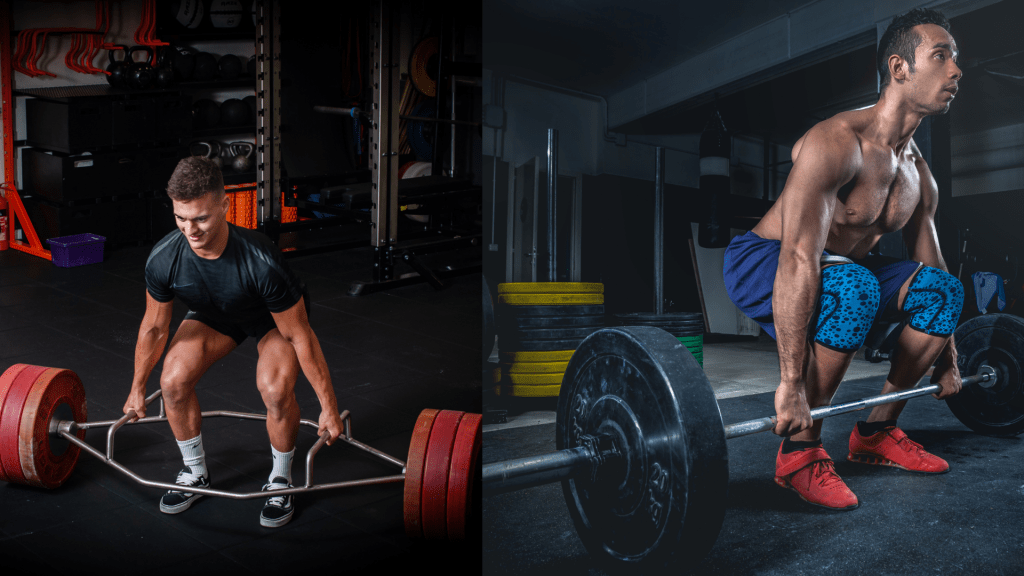
The deadlift is a popular exercise that targets several muscle groups, including the lower back, glutes, and legs. Two variations of this exercise are the traditional deadlift and the trap bar deadlift. While both exercises are effective for building strength and muscle mass, they have some key differences that make them unique. In this article, we will compare and contrast the trap bar deadlift and the traditional deadlift, highlighting their pros and cons, and ultimately why the trap bar deadlift may be the better option for most people.
The Traditional Deadlift
The traditional deadlift is a classic exercise that has been around for many years. This exercise involves standing in front of a barbell with your feet shoulder-width apart, then bending down and grasping the bar with your hands. You then lift the bar off the ground by extending your hips and knees while keeping your back straight. This exercise primarily targets the hamstrings, glutes, and lower back muscles.
Pros:
- Builds Strength: The traditional deadlift is a compound exercise that works multiple muscle groups, making it an effective exercise for building overall strength.
- High muscle activation: It involves a lot of muscle activation in the posterior chain, especially the glutes, which makes it an excellent exercise for developing a strong lower body.
- Improves posture: The traditional deadlift requires you to keep your back straight, which can help improve your posture over time.
Cons:
- Risk of injury: The traditional deadlift places a lot of stress on the lower back, which can increase the risk of injury, especially if you have a history of back problems.
- Limited range of motion: The traditional deadlift has a limited range of motion, which means it may not be the best exercise for people with limited mobility.
- Technical: The traditional deadlift requires proper form and technique to perform safely, which may take some time to learn.
The Trap Bar Deadlift
The trap bar deadlift is a variation of the deadlift that involves using a special barbell with a hexagonal shape. This barbell allows you to stand inside the bar, which can help reduce stress on the lower back and make the exercise safer.
Pros:
- Reduced stress on the lower back: The trap bar deadlift places less stress on the lower back compared to the traditional deadlift, making it a safer option for people with back problems.
- More muscle activation: The trap bar deadlift involves more muscle activation in the quads, which makes it an excellent exercise for developing strong legs.
- Easier to learn: The trap bar deadlift is easier to learn compared to the traditional deadlift, making it a great option for beginners.
Cons:
- Expensive equipment: The trap bar deadlift requires a special barbell, which can be more expensive than a standard barbell.
- Limited range of motion: Like the traditional deadlift, the trap bar deadlift has a limited range of motion, which may not be suitable for people with limited mobility.
- Not as versatile: The trap bar deadlift is primarily a lower body exercise and may not be as effective for developing upper body strength compared to the traditional deadlift.
Which is Better?
Several studies have compared the effectiveness of the trap bar deadlift and the traditional deadlift. A study published in the Journal of Strength and Conditioning Research found that the trap bar deadlift resulted in greater muscle activation in the quadriceps and glutes compared to the traditional deadlift. Another study published in the Journal of Strength and Conditioning Research found that the trap bar deadlift resulted in greater peak force and power compared to the traditional deadlift.
Furthermore, a study published in the International Journal of Sports Physiology and Performance found that the trap bar deadlift was a more effective exercise for improving vertical jump performance compared to the traditional deadlift. These studies suggest that the trap bar deadlift may be a more effective exercise for building lower body strength and power compared to the traditional deadlift.
In conclusion, while both the trap bar deadlift and the traditional deadlift are effective exercises for building strength and muscle mass, the trap bar deadlift may be the better option for most people. It is a safer exercise for people with back problems, easier to learn, and involves more muscle activation in the quads. However, it is essential to consult a qualified fitness professional to determine which exercise is best for your specific needs and goals.
For more check out my social media @the_adamniall on instagram and also my coaching site earnitallacademy.com
Discover more from
Subscribe to get the latest posts sent to your email.

Leave a comment